

2027: Rainbow Coalition Part Of Nigeria’s Political History -Sokoto PDP Guber Candidate

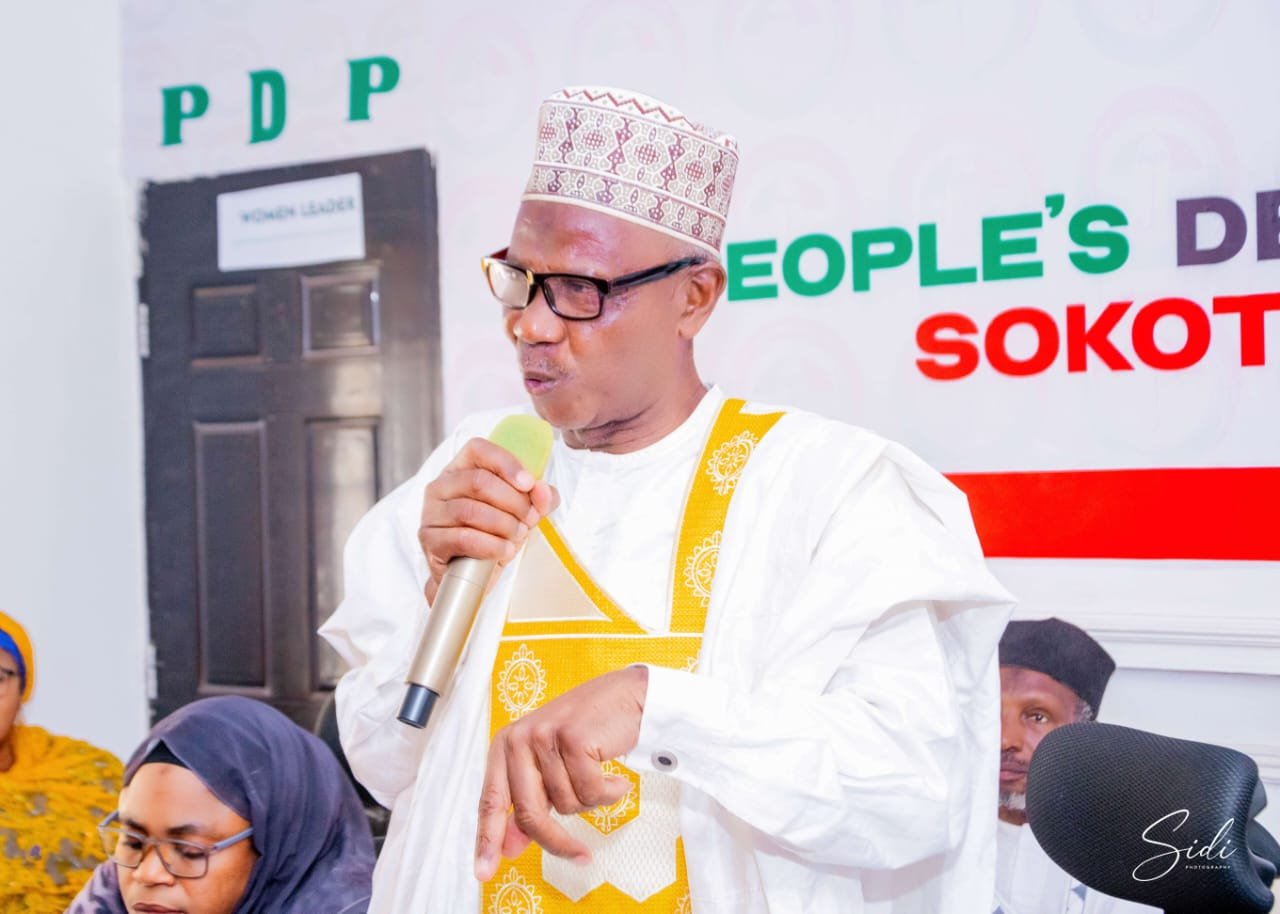
The People’s Democratic Party (PDP) governorship candidate in Sokoto State, Alhaji Abubakar Abdullahi Sokoto, has described the Rainbow Coalition as part of Nigeria’s long history of political alliances, urging Nigerians to support it as a platform to ensure a free, fair and credible election in 2027.
Abdullahi, in a statement issued on Monday in Sokoto, said the debate surrounding the coalition is not unusual in Nigerian politics.
He defined a coalition as an arrangement in which different political groups or parties agree to work together toward a common objective while maintaining separate political identities, noting that from the First Republic to the Fourth Republic, such arrangements have shaped the country’s democracy.
“What changes are the names, personalities, circumstances and objectives behind them,” he said.
The PDP governorship candidate recalled that the First Republic (1959-1966) witnessed a coalition between the Northern People’s Congress (NPC) and the National Council of Nigeria and the Cameroons (NCNC), which produced Sir Abubakar Tafawa Balewa as Prime Minister and Dr Nnamdi Azikiwe as Governor-General and later President.
He said the Second Republic (1979-1983) also saw the NPN-NPP accord between the National Party of Nigeria (NPN) under President Shehu Shagari and the Nigerian People’s Party (NPP), which became necessary because NPN lacked a majority in the National Assembly.
According to him, the accord went beyond a paper agreement as prominent NPP figures such as Chief Paul Unongo, Prof. Ishaya Audu, Chief Ademola Thomas, Chief (Mrs.) Janet Akinrinade and Mallam Mamman Ali Makele were appointed ministers, a development officially captured in Senate proceedings of November 1979.
He added that while the accord created opportunities for cooperation and representation, differences later weakened it, showing that the durability of alliances depends on management of interests.
Abdullahi further cited the AD-APP joint presidential ticket of Chief Olu Falae and Umaru Shinkafi in 1999, the activities of the Coalition of Progressive Political Parties (COP3) ahead of 2015 over election postponement and PVC issues, and the major opposition merger of ACN, CPC and ANPP into the All Progressives Congress (APC) that led to the victory of Muhammadu Buhari in 2015.
“The greatest lesson from these experiences is that political coalitions are about people as much as they are about parties,” he said.
Speaking on the current political development, the Sokoto PDP candidate said FCT Minister, Nyesom Wike, has described the Rainbow Coalition as a multi-party platform mobilising support for President Bola Ahmed Tinubu’s re-election in 2027, while maintaining that it is not an APC structure, even as APC governors have expressed concerns.
He said the debate should be viewed within Nigeria’s historical context of coalitions and realignments, and called on patriotic Nigerians to support the Rainbow Coalition towards a credible poll.
Against this background, Abdullahi called on APC governors and party leaders to adopt a pragmatic approach and work with Wike, whom he described as “a national leader and proven grassroots strategist, a master mobiliser for the Renewed Hope Agenda.”
“Our primary challenge today is not debating individual political relevance, but ensuring that President Bola Ahmed Tinubu secures a decisive victory come 2027,” he said.
The governorship candidate listed what he called key achievements of the Tinubu administration to include diplomatic restraint as ECOWAS Chairman after the Niger Republic coup by choosing dialogue over military intervention on the advice of Ulamas and traditional rulers.
Others, he said, were proactive foreign relations to protect Nigeria’s international standing, the Sokoto-Badagry Highway project as an economic catalyst for the North-West, and youth-focused interventions like the Nigerian Education Loan Fund (NELFUND) and the CNG initiative to lower transportation costs.
He said that as Nigeria moves towards 2027, the Rainbow Coalition should be understood as another chapter in the country’s continuing political evolution, whose supporters have a responsibility to explain its purpose, while Nigerians will ultimately determine the extent of their support through the democratic process.